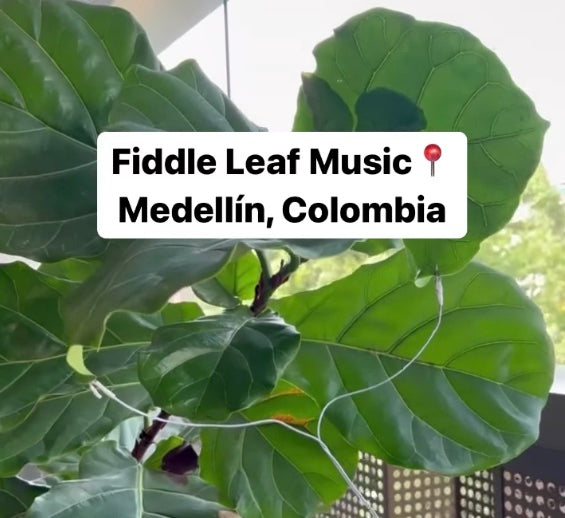
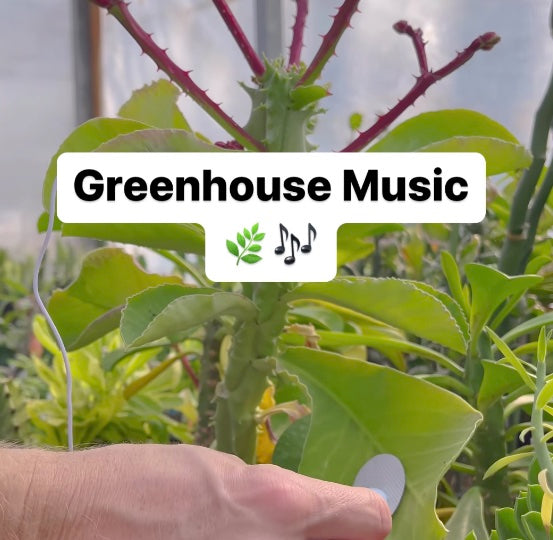
"Can plants talk?"
It's a question that comes up often. And usually, the answer is simple: no — at least not in any human sense of language or intention.
But what happens if you take the signals plants already produce… and translate them into something that sounds like a voice?
For one day, we built a way to hear it.
This experiment explores what we're calling Plant Voice — a way of translating plant signals into something that resembles speech.
A One-Day Experiment: Plant Voice
On April 1, we are releasing a temporary PlantWave soundset called Diffenbachia.
It's part of a one-day experiment we're calling Plant Voice.
Instead of mapping plant signals to musical notes and textures, this soundset maps those same signals to human phonemes — the basic building blocks of speech.
The result isn't language. It isn't communication in the way we understand it.
What Is "Plant Voice"?
Plants are constantly generating electrical signals as part of their internal processes and interactions with the environment.
Biosonification is the practice of translating those signals into sound — making patterns perceptible to human hearing. With PlantWave, this typically takes the form of generative music.
Plant Voice is a variation on that idea. Instead of notes, harmonies, and ambient textures, we mapped plant data to vowels, consonants, and fragments of speech-like sound.
Nothing new is being added to the signal. Only the translation layer has changed.
For a deeper look at how that translation works, see how PlantWave works.
Why It Feels So Real
Humans are highly tuned to recognize voices. Even small fragments of speech-like sound can trigger pattern recognition, emotional response, and the sense that something is being "said."
So when plant data is translated into phonemes, something interesting happens: your brain starts trying to interpret meaning — even if no intentional meaning is present.
This is where the experience becomes compelling. Not because plants are speaking, but because we are wired to listen.
The Soundset: Diffenbachia

Inside the app, the soundset appears as Diffenbachia — named after the Dumb Cane plant.
Historically, this plant has been associated with an inability to speak. This experiment gently inverts that idea.
How to Experience It


Available for April 1:
- Open the PlantWave app
- Select the Diffenbachia soundset
- Connect your plant
- Listen
Notice what the sound reminds you of, and observe how quickly your mind begins to interpret it. Each plant — and each moment — will sound different.
Try it today. Record a short clip of your plant and share what you hear. Tag #PlantVoice and @plantwave.
If you don't have a PlantWave yet, you can still experience Plant Voice by listening to live broadcasts from other plants through the app.
A Different Way of Hearing
Plant Voice doesn't suggest that plants are speaking in English. It does something more subtle.
It reveals how translation shapes perception, how sound design shapes interpretation, and how easily we begin to hear meaning in unfamiliar signals. The underlying data hasn't changed. Only the way we hear it.
This is a one-day release. The Diffenbachia soundset is available for April 1 only as part of the Plant Voice experiment. If you miss it, we may revisit this experiment in the future.