Mort Garson's Plantasia, Fifty Years of Music for Plants
In 1976 a composer wrote an album for an audience with no ears, and gave it away with houseplants.
Mother Earth's Plantasia is a 1976 album by Mort Garson, composed entirely on a Moog synthesizer and written to be played to houseplants. You could not buy it in a record shop. You got it free when you bought a plant at a store called Mother Earth on Melrose Avenue in Los Angeles, or when you bought a Simmons mattress at Sears. It was subtitled warm earth music for plants...and the people who love them, and for about forty years almost nobody heard it.
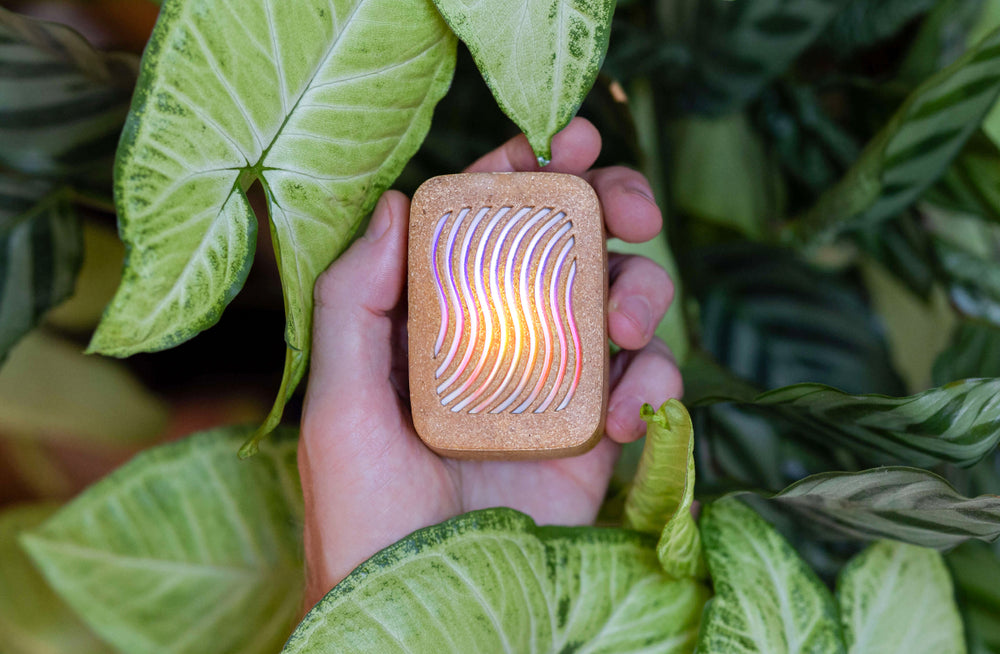
It is now one of the most beloved cult records in electronic music, and this September it turns fifty. We have spent thirteen years on the other side of the same idea. Garson made music for plants. We make PlantWave, which lets you hear music from plants.
What is Mother Earth's Plantasia?
Garson recorded the Plantasia album at Patchcord Productions in Hollywood. It's an important artifact of synthesizer history in that it was the first album from the West Coast of the United States composed entirely on a Moog. Using a synthesizer to compose a record might not sound like a big deal these days, but back then, many traditionalists questioned whether electronic music counted as music at all! Meanwhile, Garson was composing for begonias.
The "Mother Earth" of the title was not a concept. It was a plant shop, run by Lynn and Joel Rapp, who wrote plant-care books and were friends of Garson's. The record was made to go home in the bag with the fern.
A record with almost no distribution, no radio play, and no commercial ambition became, four decades later, the sound people reach for when they want to describe what a plant might sound like.
The plants named on the record
Ten tracks, and eight of them are named for a specific houseplant. The full list, in order:

- Plantasia
- Symphony for a Spider Plant, spider plant
- Baby's Tears Blues, baby's tears
- Ode to an African Violet, African violet
- Concerto for Philodendron & Pothos, philodendron and pothos
- Rhapsody in Green
- Swingin' Spathiphyllums, peace lily
- You Don't Have to Walk a Begonia, begonia
- A Mellow Mood for Maidenhair, maidenhair fern
- Music to Soothe the Savage Snake Plant, snake plant
Every one of them is a plant you can still buy at a garden center today, which is part of the record's charm. Garson was not writing for rainforest canopies. He was writing for the pothos on somebody's kitchen shelf.
Did the plants actually like it?

Honestly, we have no idea, and neither did Garson. Plantasia was not a scientific project. It was a warm and funny record made by a man with a new instrument and a friend with a plant shop, in a decade when a lot of people were reading books about talking to their ferns.
A plant responds continuously to light, water, temperature, and touch, and those responses show up as measurable shifts in the electrical activity moving through its tissue. So, whether or not the plants enjoy the music, it's clear that they produce enough electrical activity to allow plants to play music on instruments like Mort's Moog.
Music for plants, and now music by them

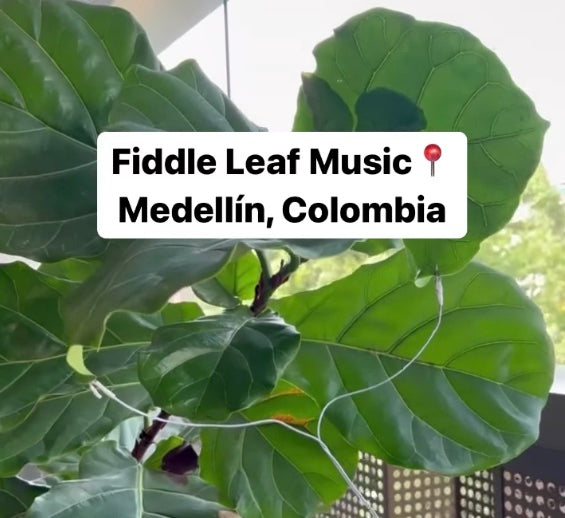
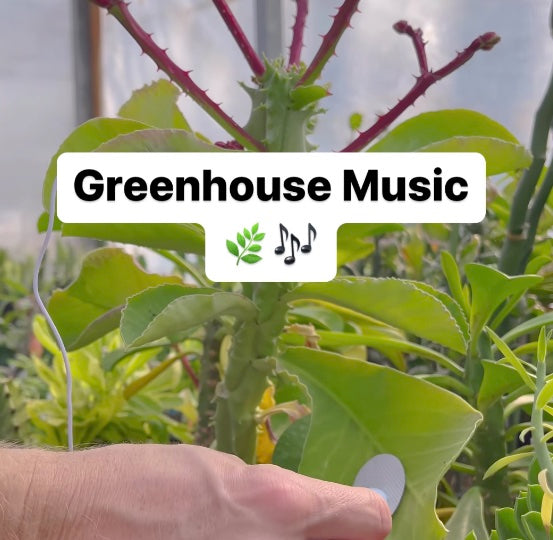
PlantWave places a pair of electrodes on a leaf and reads small fluctuations in conductivity that move through the plant as it responds to its surroundings. Those variations are translated in real time into pitch and instrument. The field is called biosonification, the translation of biological data into sound, and it is the same broad idea NASA uses to turn data from distant stars into something you can listen to.
Unlike with Garson's work for plants, with PlantWave, nothing is pre-composed. The music is a live translation of a signal that is changing while you stand there, which is why it is never repeating. And the plant is not performing for you. It supplies the signal, the instrument gives that signal a voice, and you get to receive its beauty. If you want the skeptical read first, the science behind PlantWave is the place to start.
Fifty years apart, the two types of music answer different questions. Plantasia asks what a plant would want to hear. Listening to your own plant asks what it is doing right now.
Plantasia turns fifty in Kingston, New York
On September 19 and 20, 2026, Night Howl and Sacred Bones are marking the fiftieth anniversary at Seed Song Farm, a nonprofit educational farm in Kingston, New York. Two days of live music, botanical arts, workshops, a plant sale, and a curated market, with Laraaji, Mary Lattimore, Gigi Masin, Colin Stetson and Brìghde Chaimbeul, SPELLLING, Green-House, Alabaster DePlume, Flore Laurentienne, JJJJJerome Ellis, and a PlantWave installation on the bill.

We are building an installation there, and it is the closest thing to a direct reply to Plantasia's original vision.
PlantWave Plant Music Installation
A live concert made by plants. Four living plants are connected to PlantWave devices that read subtle electrical signals and translate them into sound. Each plant is routed to play its own instrument, resulting in real-time melodic expressions never heard before.
Fifty years ago, Mort Garson made music for plants. This is music by them. Nothing is pre-recorded. Each note reflects what's happening inside the plant in that moment. The music shifts as the plants respond to light, warmth, and the people around them. Walk up to a single plant to hear it alone, or stand among all four to hear a symphony. The longer you stay, the more you notice the subtle shifts and the sense of how alive and responsive each plant really is.

The installation's sound design is specially crafted by PlantWave's creator, Joe Patitucci, with instruments inspired by Garson's original Moog palette.
Tickets and the full schedule are at plantasia-ny.com. If you are anywhere near the Hudson Valley that weekend, come and stand in the middle of it. If you cannot make it upstate, you can hear your own plants at home.
Key Takeaways
- Mother Earth's Plantasia is a 1976 Mort Garson album written to be played to houseplants, composed entirely on a Moog, and the first West Coast album to be.
- It was given away with houseplants at a Los Angeles shop called Mother Earth and with Simmons mattresses at Sears, which is why almost nobody heard it for forty years.
- Eight of its ten tracks are named for specific houseplants, all of them still common today.
- Whether plants enjoy music is not established. That plants respond continuously to light, water, temperature, and touch, in ways that show up as electrical activity, is.
- Biosonification reverses Garson's premise by translating a plant's own live signal into sound rather than composing sound for it.
Frequently Asked Questions
What is Mother Earth's Plantasia?
A 1976 album by Mort Garson, released on Homewood Records and recorded at Patchcord Productions in Hollywood. It was composed entirely on a Moog synthesizer and written specifically to be played to houseplants. Its full subtitle is warm earth music for plants...and the people who love them.
Why was Plantasia so hard to find?
It was never sold through normal retail. Copies were given away with a houseplant purchase from the Mother Earth shop on Melrose Avenue in Los Angeles, and with Simmons mattresses bought at Sears. Sacred Bones gave it a proper release on June 21 2019, on vinyl, CD, and cassette.
Which plants are named on Plantasia?
Spider plant, baby's tears, African violet, philodendron, pothos, peace lily, begonia, maidenhair fern, and snake plant. Two tracks, the title track and Rhapsody in Green, name no species.
Does playing music to plants actually work?
While plants do clearly respond to sounds of running water and munching predators, it's still highly debated how they respond to music. What is well established is that plants respond to their environment continuously, and that those responses are measurable. That is the basis of turning biological data into sound, and it is a different question from whether a plant has a favorite record.
What is the difference between music for plants and plant music?
Plantasia is music for plants: composed by a person, intended for a plant to receive. Plant music is the reverse. The plant's own changing electrical signal is translated into sound as it happens, so nothing is composed in advance and no two listens are the same.
What Moog did Mort Garson use?
Garson worked on Moog modular equipment throughout the era, and Plantasia was composed entirely on the instrument. It is the record most often cited as proof that the Moog could sound tender rather than futuristic.
PlantWave is a device that reads the electrical activity in a living plant and turns it into music in real time. Learn more →
Album details verified against the Sacred Bones release and public discographic records: Mother Earth's Plantasia, Mort Garson, Homewood Records, 1976; reissued by Sacred Bones Records, June 21 2019. Plantasia NY, September 19 and 20 2026, is produced by Night Howl and Sacred Bones at Seed Song Farm, Kingston, New York.