Ariana Grande, Peach PRC, and Pop Music's Plant Music Moment
What people are hearing when they say a pop song sounds like a plant.
Something shifted in pop culture in 2026. Fans spent weeks convinced they could hear real plant sounds threaded through Ariana Grande's album petal, and an Australian pop star named Peach PRC has been openly making music with a live plant, on stage inside a giant lotus and at home with a pot of violets, and telling everyone exactly how she does it.
We can't tell you what is behind Ariana's record as we have not been contacted by her or her team. What we can tell you is that the sound people are reaching for when they say "that sounds like a plant" is real, it has a name, and at least one artist is using it right out in the open. The name is PlantWave.
Did Ariana Grande use PlantWave on petal?
Here is the honest version. When the lead single from petal arrived, listeners on TikTok started passing around a theory: that the strange, breathing texture under the track was made from "plant waves." Some of them put the song next to PlantWave recordings as their evidence. A few outlets picked it up and named PlantWave as the technology people were pointing at.
We noticed. We also stayed quiet, on purpose, and we will do the same here. We have not been contacted by Ariana Grande or her team, and we have no inside knowledge of how that album was made. That said, we love that people are now hearing plants in music, even when there is no plant in the frame.


The fan edits that carried the "plant waves" theory across TikTok. Tap to watch. Shared as commentary, not as evidence about how the album was made.
Whether or not the theory holds, here is what it really tells you: the sound of a plant has become recognizable enough that a room full of pop fans reached for it as the explanation.
That is what a category looks like when it arrives. A few years ago, "it sounds like a plant" would not have been a sentence anyone knew how to say. Now it is a working theory people apply to a number one artist. Which raises a more grounded question than any rumor: who is actually doing this on purpose?
The pop star who really is making music with plants
Peach PRC is an Australian pop artist with more than two million followers, and she has turned making music with a plant into one of the most talked-about moments of her live show. On her 2026 tour she sits inside an enormous lotus flower, clips a set of electrodes to a living plant on stage, and performs alongside it. She has done it with a snake plant, and in Perth with a princettia. She tells the room the result is different every night, because it is.
@peachprc on TikTok
Unlike the Ariana theory, there is no mystery here. Peach has explained it herself, warmly and in her own words. On the Date With Tait podcast she described the whole thing:
"I've been using this thing that I have that's called a PlantWave. It has electrodes that you put onto the plant, and it will pick up the electromagnetic frequencies or the water in the plant, and it rises and falls and plays different synths depending on how happy the plant is, or if it's got water, or if it's in the sun. It's so cool."
She talked about watering a plant mid-session to change the sound, and about how a thirsty plant gives her fewer notes to work with than a thriving one. She also said something we think about a lot:
"Being in the club feels the same as going in the forest and taking a hike. It's the same energy release. It's about connecting, whether that's with other humans or with the trees and the plants. I think it's all one thing."
This is not a one-off stage gimmick for her. She has been posting herself making music from plants at home since early 2026, long before the tour, rigging up a pot of violets in her garden and playing along on an omnichord. She has a jacaranda tree she named Jackie. She volunteers planting trees at a bush reserve. The plant music is one expression of something she was already living.
What is plant music, actually?
If the last two sections sound like magic, here is the mechanism, because the real thing is better than the myth.
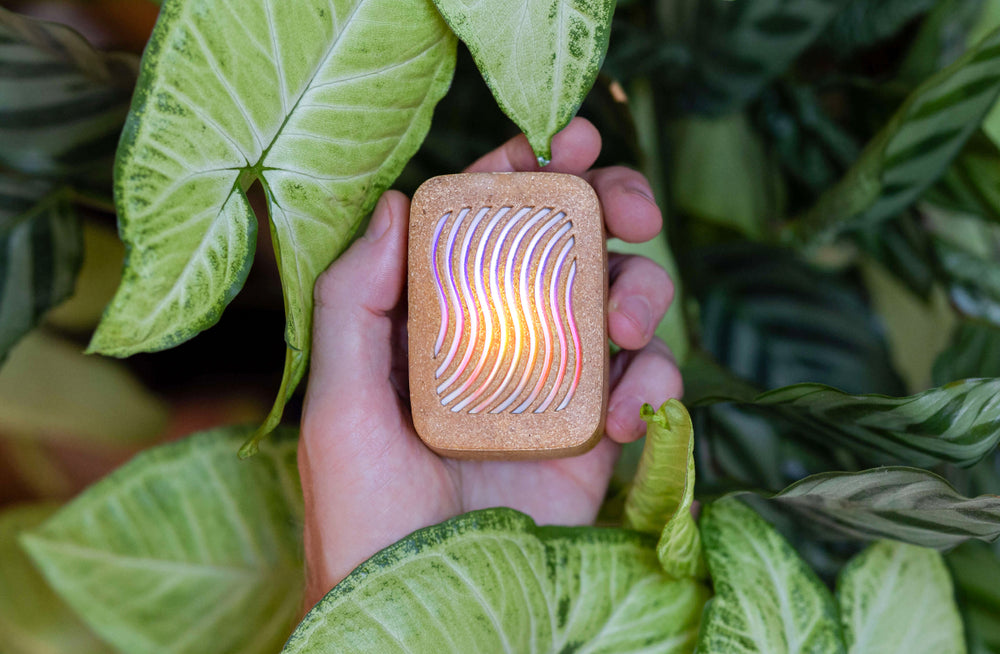
A living plant is never electrically still. Tiny fluctuations in conductivity move across its tissue all the time as it responds to light, water, temperature, and its surroundings. PlantWave places a pair of electrodes on a leaf, reads that slow rise and fall, and translates the variation into pitch and instrument in real time. This is the field called biosonification, the translation of biological data into sound. NASA uses the same broad idea to turn data from distant stars into something you can hear.

Two things worth being precise about. The plant is not performing for you, and it is not a recording being played back. It is a live translation of a real signal, which is why it never repeats and why Peach gets a different result every night. And the plant is not "singing" in any human sense. When we talk about whether plants can make music, the honest answer is that the plant supplies a continuously changing signal and the instrument gives that signal a voice. You are the one who listens.
If you have ever wondered whether the science behind PlantWave holds up, it does, and it is the same responsiveness that fans were, in their own way, pointing at with the Ariana theory. Plants are not passive background. They are reacting to the world around them at every moment, and biosonification is one way to hear it.
Are other artists using plant music too?
Probably, and honestly, we do not always know.
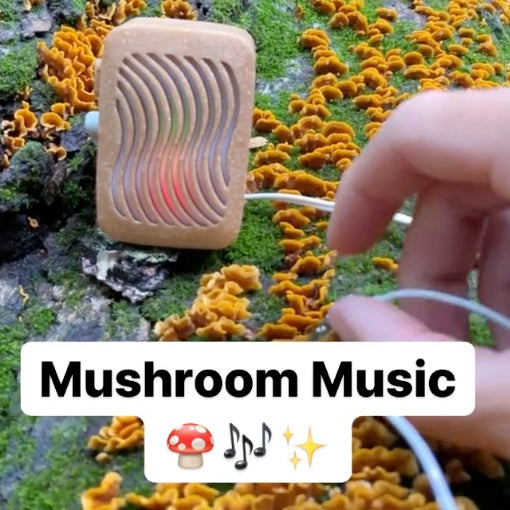
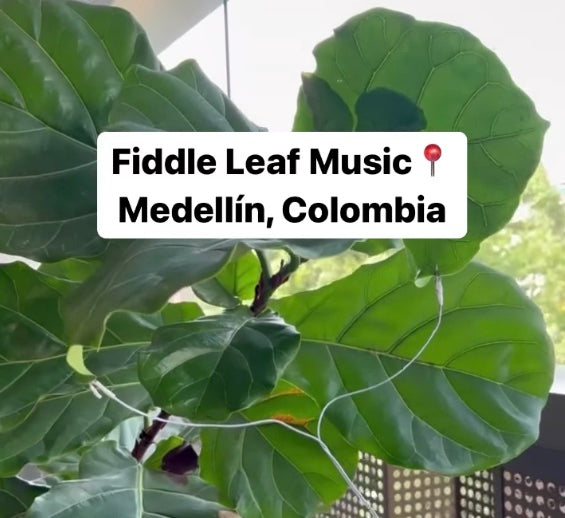
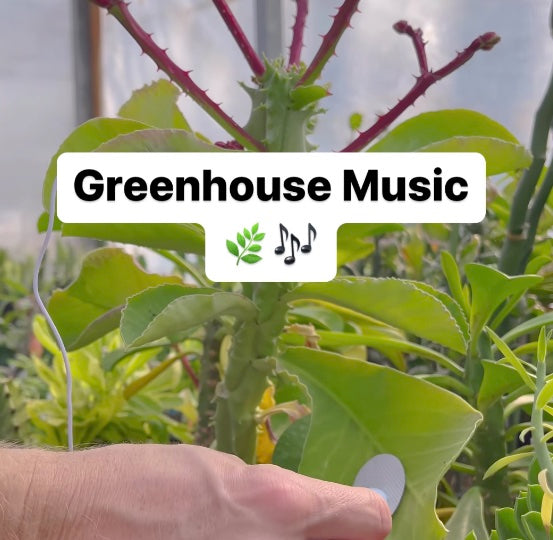
Musicians have been building with PlantWave in studios, on stages, and in installations for years. Some of them tell us, and many keep it as a quiet ingredient in their own process. So when you hear a texture on a record that feels alive and a little unrepeatable, sometimes there is a plant behind it, and sometimes it is a synthesizer doing a very good impression of one. We cannot audit every song, and we are not going to pretend we can.
PlantWave itself was created by an artist. Our founder, Joe Patitucci, has been making music with plants for more than a decade, and he releases his own plant-composed records, like Quartet, a live plant performance recorded at the Philadelphia Museum of Art, and 420hz, composed entirely from a cannabis plant. The instrument exists because someone wanted to make this music in the first place.

What we can tell you is that the line between "sounds like a plant" and "is a plant" is genuinely blurry now, and getting blurrier. That is the whole story of 2026, told through one rumor and one artist who was glad to explain herself. The tools are real, they are out in the world, and the sound has become part of the vocabulary of pop.
The best way to settle any of it for yourself is the oldest one. Put your hands on a plant, or better, listen to one, and hear what it actually sounds like when a living thing is given a voice.
Key Takeaways
- In 2026, fans widely theorized that Ariana Grande used real plant sounds on her album petal. PlantWave has made no claim either way and has not been contacted by her team.
- The more grounded story is that plant music has become culturally recognizable enough that people now reach for "plants" as an explanation for an unusual sound.
- Peach PRC, an Australian pop artist with 2M+ followers, openly performs and records with a PlantWave, on tour and at home, and has explained exactly how she does it.
- Plant music is made through biosonification: electrodes read a plant's changing electrical activity and translate it into sound in real time. It is a live translation, not a recording, so it never repeats.
- Other artists almost certainly use it without announcing it, which is why "sounds like a plant" and "is a plant" are now hard to tell apart.
Frequently Asked Questions
Did Ariana Grande use PlantWave or plant sounds on petal?
We do not know, and we have made no claim. A widely shared fan theory in 2026 held that the album petal used real "plant waves," and some fans cited PlantWave recordings as their comparison. PlantWave has not been contacted by Ariana Grande or her team and has no knowledge of how the album was produced. We love that people are hearing plants in music, and we will not confirm or deny something we had no part in.
What does Peach PRC use to make music with plants?
Peach PRC uses a PlantWave, the device that reads a living plant's electrical activity and translates it into sound. On stage she clips the electrodes to a plant and performs alongside it, and she has described the setup in detail on the Date With Tait podcast. She also plays an omnichord along with the plant's sound.
Is plant music real, or is it a gimmick?
It is real. The science behind PlantWave is biosonification: a plant's continuous changes in electrical conductivity are measured and translated into pitch and instrumentation. It is a live reading of a real biological signal, not a pre-recorded track or a random noise generator.
Can you really make music with a plant?
Yes. A plant produces a constantly shifting electrical signal as it responds to its environment. A device like PlantWave reads that signal and gives it a voice in real time. The plant supplies the living, ever-changing input, and the instrument turns it into plant music. Because the signal never stops changing, the music never exactly repeats.
Which other musicians use plant music?
Many artists have used PlantWave in studios, live shows, and installations over the years, and most do not announce it. Peach PRC is one who has been openly enthusiastic about it. Because the sound can be hard to distinguish from a well-designed synthesizer, it is often impossible to know from listening alone whether a given track used a real plant.
PlantWave translates a living plant's electrical signals into real-time, never-repeating music. Learn more →
Sources and further reading: Peach PRC on the Date With Tait podcast (host Tait McGregor), 2026, and her public performances and videos. The Ariana Grande petal fan-theory cycle was covered by outlets including Tag24 in 2026; PlantWave has made no claim regarding the album. Learn how the translation works in What Is Biosonification? and How PlantWave Works.