Biosonification is the process of translating biological data into sound. It takes signals from living systems — electrical activity, movement, physiological changes — and maps them into sonic outputs we can hear and interpret. It is a subset of a broader field called sonification, but with a specific focus: living organisms.
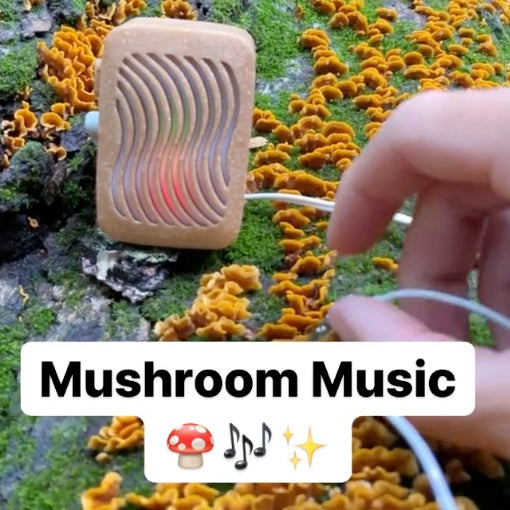
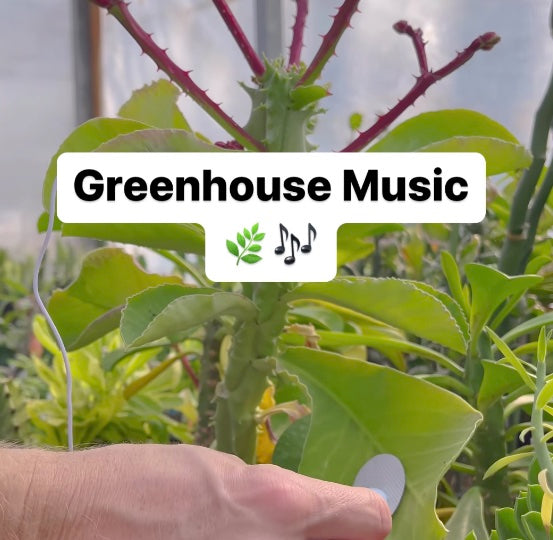
If you've ever heard "plant music," what you were actually hearing was biosonification in action across living systems, including plants and fungi. This article explains what it is, how it works, what biological signals are involved, and how systems like PlantWave turn these signals into real-time sound.
Start With the Foundation: Sonification and Biosonification
Before defining biosonification, it helps to understand sonification — the use of non-speech audio to represent data. Instead of visualizing data as a graph or chart, sonification expresses it as sound. Patterns, changes, and relationships in the data are mapped to elements like pitch, rhythm, volume, and timbre.
For example: a rising data value might map to rising pitch. Faster changes might produce faster rhythms. Greater intensity might increase volume or brightness. Sonification is widely used in scientific analysis, medical monitoring, accessibility tools, and data-driven art.
Biosonification applies this same principle to biological data. Instead of financial data, weather data, or system logs, the input comes from living organisms — heart rate, brain activity, muscle signals, movement, respiration, or electrical activity in plants. The process always follows three core steps:

Simple definition: Biosonification = biological data → mapped into sound. The organism provides the signal. The system provides the translation.
Where the Idea Comes From
Early experiments in biosonification date back decades. In 1965, composer Alvin Lucier created Music for Solo Performer, using brainwave activity (EEG) to drive percussion instruments. The performer wasn't "playing" in a traditional sense — the system translated biological signals into sound.
This established a foundational idea: biological activity can be rendered as sound through a designed system.
In sonification research, this process is defined as the systematic transformation of data into sound in a way that preserves relationships within the data — making change perceptible through listening.
Today, similar approaches are used in biofeedback systems that translate heart rate, respiration, or brain activity into sound, extending biosonification across both human and non-human systems. Plant-based systems represent one of the most accessible and immediate forms of this idea in practice. For the full story of how plant biosonification evolved from early experiments to PlantWave, see The Origin & Future of Plant Biosonification.
What Counts as Biological Data?

Biological data — often called biosignals — are measurable signals generated by living systems such as plants and fungi. These signals are not "music" on their own. They are variations in measurable properties: electrical activity, conductivity, pressure, movement, chemical changes.
One defining characteristic of biological systems is that they are constantly changing. Even in a stable environment, living organisms regulate internal processes, respond to subtle environmental shifts, and maintain dynamic equilibrium. This means biosignals are continuous, variable, and non-repeating — qualities that make them especially well-suited for sonification.
Biological signals in plants
In the case of plants, biosonification typically involves electrical signaling and conductivity changes. Plants exhibit measurable electrical activity as part of their internal processes — associated with ion transport, water movement, cellular activity, and systemic responses to environmental conditions.
These signals are real and measurable. They are not sound waves. They are not intentional communication in a musical sense. They are biological data streams — and when you hear plant music, you are hearing those streams translated into sound.
Key point: plant electrical signaling is a well-studied area of plant physiology. The signals are grounded in biology — not mysticism — which is what makes biosonification a legitimate and meaningful practice.
Mapping: How Data Becomes Sound
The most important concept in biosonification is mapping — the rules that define how a data signal becomes an audible experience. The same biological signal can sound completely different depending on how it is mapped. A signal could be mapped to pitch, to rhythm, to filter changes, or to volume. The mapping layer is what turns raw data into something perceptible.
Pitch
Changes in the signal determine musical notes — higher values produce higher pitch, lower values produce lower pitch.
Timing
The rate of change in the signal can influence rhythm or note density.
Amplitude
Signal intensity can control loudness — stronger signals produce louder sound.
Timbre
Data can shape the tone or character of the sound — its texture and quality.
Structure, not randomness
A crucial distinction: biosonification is not random sound generation. It must follow consistent rules so that the same input produces predictable output, and changes in sound correspond to changes in data. Without structured mapping, the result is noise — not meaningful sonification.
This also means that avoiding misinterpretation matters. Because biosonification produces expressive, evolving sound, it's easy to read too much into it. The organism is not "making music" intentionally. The sound is not being recorded from inside the organism. The system is not decoding thoughts or emotions. It is translating measurable biological variation into sound using defined rules — nothing more, nothing less.
Where PlantWave Fits

PlantWave is a real-time biosonification system. For a deeper explanation of how this process works in practice, see the science behind PlantWave. It applies the principles described above to living plants, making the abstract concrete and the invisible audible.
Here's how the pipeline works: electrodes attached to a plant measure microfluctuations in conductivity between two points. Those variations are graphed over time as a wave. The wave is translated into pitch values. Those values control instruments — grouped into selectable soundsets. The result is continuous, evolving sound driven entirely by the plant's signal.
When listening to PlantWave, you are not hearing the plant directly. You are hearing a mapped representation of its signal — shaped by the biological input, structured by the mapping system, and rendered audible through designed instruments.
Real-time means no two moments are identical
One of the most powerful aspects of real-time biosonification is that the sound updates continuously — there is no pre-recording, no loop, no fixed composition. The output reflects ongoing signal variation, which means it evolves organically and never exactly repeats. The plant is always different from one moment to the next, and the music reflects that.
Plant biosonification has become one of the most widely recognized entry points into this field — largely because plants are accessible, non-invasive to measure, and produce signals that are continuous, subtle, and genuinely variable — though similar techniques apply to other organisms like fungi. "Plant music" is the accessible term. "Biosonification" is the technical category. Both refer to the same underlying process.
Why Biosonification Matters
- Perceptual access It allows us to perceive data that would otherwise be invisible — biological processes that unfold below the threshold of ordinary awareness.
- Pattern recognition Sound can reveal patterns that are difficult to see visually. Temporal changes, rhythms, and variations become immediately apparent when rendered as audio.
- Engagement Listening creates a more immediate and intuitive connection to data — one that doesn't require expertise to experience.
- Creative expression It enables new forms of generative art based on living systems — work that is neither composed nor random, but emergent.
Biosonification also naturally overlaps with generative art. In generative systems, a set of rules is defined and the system produces evolving output. When biological data is used as input, the system becomes data-driven and non-repeating — the organism becomes a source of variation rather than a composer. This is why biosonification is often described as a bridge between living systems and generative music.
Common Misconceptions
No. It is structured mapping of real biological data — the same input consistently produces the same type of output.
No. The system translates signal variation into sound. The plant is the input; the design is the translation.
No. It measures electrical or conductive changes — not audio. There is no microphone involved.
No. Biosonification does not make claims about consciousness or intention. It demonstrates that measurable signals change — and that those changes can be mapped to sound.
Frequently Asked Questions
It is the process of turning biological signals into sound using structured mapping. A living organism generates measurable data; a designed system translates that data into an audible experience.
Yes. It is based on measurable biological data and established principles of sonification — a recognized field in auditory display research and data science.
Signals such as electrical activity, conductivity changes, movement, heart rate, brain activity, and physiological changes. In plants specifically, conductivity and electrical signaling are the most commonly measured inputs — and increasingly in fungi and other organisms.
The sound is generated from data, not composed intentionally by a human or organism. The structure comes from the mapping system, not from musical intention. It can feel musical — but the source is biological variation, not composition.
Yes — and it increasingly is. It enables generative art forms where living systems provide the variation, creating work that is neither pre-composed nor random, but emergent and evolving in real time.
Key Takeaways
- Biosonification is the translation of biological data into sound through structured mapping
- It is a subset of sonification, focused specifically on living systems
- Biological signals are measurable, dynamic, continuous data streams — not intentional communication
- Mapping determines how data becomes audible — the same signal can produce very different sound depending on the mapping design
- Plant biosonification is one application of this broader field; "plant music" is the accessible term for the same process
- PlantWave is a real-time biosonification system that applies these principles to living plants
Astrophysicist Sarah Kane applies the same principle to study the cosmos — translating starlight data into sound. Hear the conversation on the Nature of Now podcast.
Experience Biosonification Directly
This is where the concept becomes tangible — where biological signals are no longer abstract, but audible. PlantWave connects to any plant in your home and translates its live electrical signals into real-time music.
Explore PlantWave Listen on YouTube